
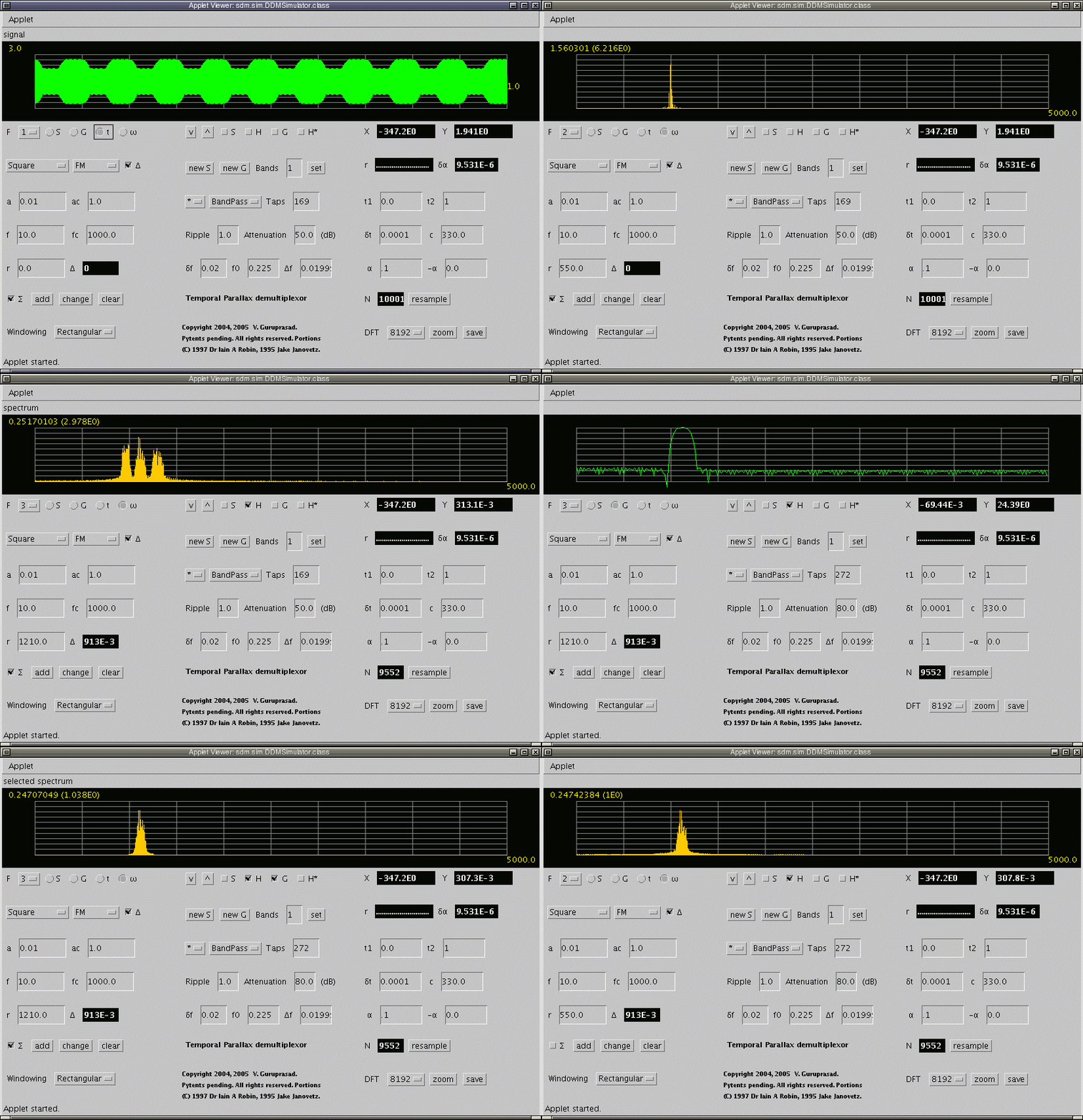
Temporal parallax is then applied in the form of the H operator, the "parallax angle" being the alpha value (lower right panel). The spectra then spreads out so that the contributions of the three sources are at different frequency bands (this can be verified on the actual simulator by unchecking the signal summation in the lower left panel, and selecting successive sources using the F selector.)
A band pass filter G is then configured around the shifted spectrum of the desired source, the one at 550 m in the example shown. When this filter is applied (controls for both H and G are in the lower middle panel), the shifted spectrum of the desired source remains and the contributions of the other sources are eliminated (to 80 dB or better in the example). This selected spectrum can be shifted back by applying the reverse H operator -- this part is still to be implemented. For now, the last screen shot shows, for comparison, the result of the H operator applied to the selected source alone i.e. without including the contributions of the other two by unchecking the source summation (see the sigma button, lower left).
Please visit this site often. These pages will be evolving frequently in the next few months.
Last change: 2006.04.22 21:53:05.
papers
licensing
news
contact
Please revisit - this site & i continue to evolve.
